RGUHS Nat. J. Pub. Heal. Sci Vol No: 12 Issue No: 2 pISSN: 2249-2194
Dear Authors,
We invite you to watch this comprehensive video guide on the process of submitting your article online. This video will provide you with step-by-step instructions to ensure a smooth and successful submission.
Thank you for your attention and cooperation.
1Department of Shalakya Tantra, Sushrutha Ayurvedic Medical College, Bengaluru, Karnataka, India
2Dr. Pooja B, Assistant Professor, Department of Rasashastra and Bhaishajya Kalpana, SDM College of Ayurveda & Hospital, Thanniruhalla, Hassan, Karnataka, India
3Sushrutha Ayurvedic Medical College, Bengaluru, Karnataka, India
*Corresponding Author:
Dr. Pooja B, Assistant Professor, Department of Rasashastra and Bhaishajya Kalpana, SDM College of Ayurveda & Hospital, Thanniruhalla, Hassan, Karnataka, India, Email: anu.pooja93@gmail.com
Abstract
Telogen effluvium is a prevalent form of hair loss marked by diffuse thinning resulting from disruptions in the hair growth cycle. This condition can be triggered by various factors, including psychological stress, hormonal fluctuations, nutritional deficiencies, and acute or chronic illnesses. This case report describes the treatment of a 20-year-old female patient diagnosed with Khalitya (modern equivalent: Telogen effluvium) using a 21-day regimen of Nasya karma with Bhringaraja Taila, followed by Narasimha Rasayana for six months. The report details the treatment protocol, duration, outcomes, and overall improvement in the patient’s symptoms, underscoring the efficacy of traditional Ayurvedic methods in addressing hair loss.
Keywords
Downloads
-
1FullTextPDF
Article
Introduction
Healthy, strong, and vibrant hair significantly enhances one’s appearance and personality. Just as the face reflects overall health, hair also mirrors the body’s internal well-being, making proper hair care essential. While modern treatments offer various solutions, hair problems, even when considered minor, can cause considerable discomfort and embarrassment. In today’s fast-paced world, sedentary lifestyles, stress, poor dietary choices, and demanding schedules disturb the body’s natural equilibrium, contributing to various health issues, including hair loss.
Hair fall has become increasingly common, affecting not only physical appearance but also mental well-being. Studies have shown that prolonged hair loss can severely undermine a person’s self-esteem, confidence, and overall sense of identity. In Ayurveda, hair loss is referred to as Khalitya. It is classified under Shiroroga (diseases of the head) due to its location and similar disease mechanisms.1 Khalitya is also described as a Kshudra Roga (minor ailment) due to its non-life-threatening nature.2 However, despite being labeled as a minor condition, it can cause significant emotional distress. From an Ayurvedic perspective, Khalitya arises from an imbalance in Pitta dosha, aggravated by stress, poor lifestyle choices, and environmental factors. This imbalance weakens the hair roots, resulting in excessive hair fall. Acharya Sushruta explains that Pitta and Vata cause loosening of the hair follicles (roma koopa shitilata), resulting in hair loss. Meanwhile, Kapha and Shonita (blood) block the follicles, inhibiting the growth of new hair and ultimately producing Khalitya.3
In modern medicine, a similar condition known as Telogen effluvium is a form of nonscarring alopecia characterized by diffuse, often acute hair shedding following metabolic stress, hormonal changes, or the use of certain medications. Telogen, or dormant hair, constitutes about 15% of the hair on a healthy scalp, while the remainder is anagen hair, which is actively growing. Under prolonged stress, up to 70% of anagen hair can transition to the telogen phase, leading to significant hair loss. Common triggers include febrile illnesses, infections, surgery, trauma, postpartum hormonal changes, hypothyroidism, and nutritional deficiencies such as low protein or iron levels.3 Telogen effluvium can be correlated with Khalitya. Traditional Ayurvedic treatments, including Abyanga (oil massage), Nasya (nasal administration of medicated oils), and herbal therapies, aim to restore the balance of doshas, addressing both physical and emotional aspects of hair loss. Therefore, this study was conducted to evaluate the effectiveness of Bringaraja taila nasya administered for 21 days in the management of Khalitya.4
Case Presentation
A 20-year-old female patient presented to the Outpatient Department of Shalakyatantra, Sushrutha Ayurvedic Medical College and Hospital, Bengaluru, with the following complaints:
1. Gradual thinning of hair for the past two years
2. Significant hair fall for the past two years
3. Receding hair line for the past one year
4. Itching and dandruff for the past one year
Past Medical History and Treatment
The patient had recurrent episodes of tonsillitis, running nose, and fever since the age of 15, along with a history of anaemia and migraine. These conditions were managed with Ayurvedic treatments, offering temporary improvement.
Personal History
Wake-up time: 4:45 am
Mala Pravrutti: Constipated and irregular
Mutra Pravritti: 4-5 times/day; once at night
Vyayama: Regular practice of Yogasana
Snana: Hot-water head bath
Ahara/Pana: Spicy, mixed diet, with less water intake
Vihara: Tamo-guna pravritti, divaswapna
Nidra: Disturbed
Manas: Rajo-tamo, Bhaya, overexcitement, anxiety
General Examination
BP: 110/80 mmHg; Pulse: 86 bpm; Temperature: 96 °F
Weight: 52 kg; Height: 151 cm
Pallor: Present; Icterus: Absent; Lymphadenopathy: Absent
Clubbing: Absent; Edema: Absent
Scalp Examination
The following parameters were assessed:
1. Site of involvement - Parietal, frontal, and occipital regions of the scalp
2. Skin colour - No discolouration
3. Rashes/Discharge - Absent
4. Sensation - Present
5. Texture of hair - Significant thinning
Causes of Hair Fall Based on Patient History
1. Ahara: Consumption of chips, deep-fried foods, pickles, excessive curd, ice creams, and milkshakes -leading to Vata and Pitta prakopa
2. Vihara: Diwaswapna, Atapasevana, and Prajaga-rana-causing Tridosha prakopa
3. Manasa: Bhaya and mental stress - leading to Vata prakopa
4. Achara: Hot-water head baths - causing Pitta prakopa
5. Vichara: Pessimistic thinking - resulting in Vata prakopa
6. Nidanartaka: Jwara (recurrent fever) - contributing to Pitta prakopa
Purvarupa: Gradual thinning of hair and consistent hair loss.
Rupa: Raised hairline in the frontal region.
Samprapti
The nidana disrupts Vata and Pitta, leading to impairment of rasa and ashti, which subsequently results in the kshaya of rasa and ashti, and manifests as khalitya. Furthermore, Pitta dushti is a causative factor for jwara, and recurrent jwara contributes to hair fall. Additionally, divaswapna leads to Kapha prakopa, resulting in a blockage in the romakupa and preventing regeneration of new hair.
Samprapti Ghataka
Dosha: Pitta- Pachaka, Bhrajaka, Vata-Samana, Vyan, Kapha- Tarpaka
Dushya: Dhatu- Raso, Rakta, Asthi, Mala- Sweda, Kesh
Adhistana: Keshabhoomi
Srotas : Rasavaha, Raktavaha, Asthivaha, Swedavaha, Manovaha
Srotodushi : Sanga
Agnidushti : Manda
Udhbhava Sthana : Amashaya
Vyakta Sthana : Keshabhoomi/Scalp
Swabhava : Chirakari
Rogamarga : Bahya
Sadhyaasadhyata : Sadhya
Diagnosis
Based on the clinical examination, the patient was diagnosed with Khalitya (Table 1).
The modern correlating condition is Alopecia (Telogen effluvium), characterized by diffuse hair thinning and hair loss.
Symptoms were graded using standard assessment criteria before and after treatment. (Table 2)
Treatment Plan
The patient underwent a Nasya therapy protocol using Bhringaraja Taila for 21 days. The procedure included Mukhabhyanga, steam inhalation, administration of nasal drops, and Kavala (gargling) with Triphala Kashaya, followed by Dhoomapana.
Oral Medications
• Ferberry Syrup (5 mL BD after food) for 21 days
• Narasimha Rasayana (1 tsp BD after food) for six months.
External Applications
Regular Shiro Abhyanga with Bhringamalaka Taila.
Nasya Protocol (Following Arohana and Avarohana Karma for Treatment)
The number of drops is gradually increased from 6 drops on Day 1 to 20 drops on Day 8, maintained at 20 drops until Day 14, and then gradually decreased from Day 15 to Day 21.
Follow-Up
Follow-up 1 - After two months
Follow-up 2 - After four months
Observation and Results
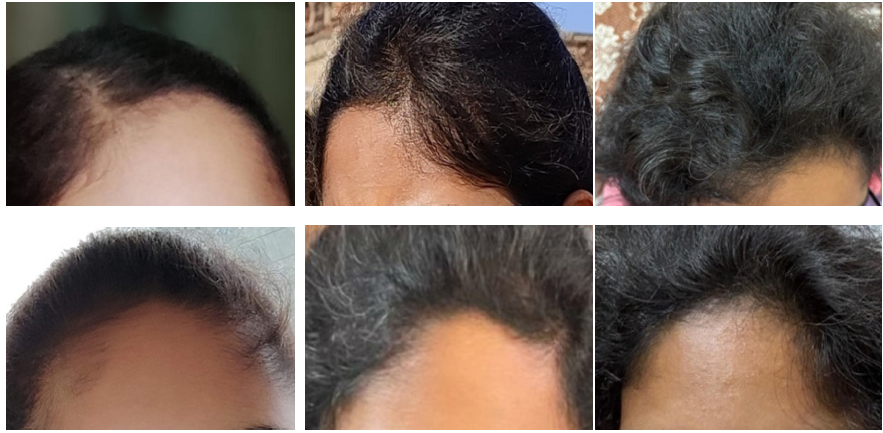
The patient experienced a progressive reduction in hair fall, scalp roughness, itching, and dandruff over eight months, indicating significant improvement in symptoms (Table 3). Noticeable improvement in hair texture and reduction in symptoms was observed by six months after treatment (Figure 1).
Discussion
This case study highlights the successful treatment of Khalitya, corresponding to telogen effluvium, through a targeted Ayurvedic regimen comprising 21 days of Bhringaraja Taila administered via Marsha Nasya, followed by six months of Narasimha rasayana. The patient's condition was precipitated by a combination of factors, with recurrent fever (jwara) identified as the primary causative agent. The interplay of jwara and other lifestyle and dietary habits, including excessive consumption of chips, deep-fried foods, pickles, curd, ice cream, and milkshakes, further contributed significantly to the hair loss.
In Ayurveda, jwara is stated to disrupt the body’s dosha equilibrium, particularly affecting Pitta and Vata doshas. Fever can induce systemic inflammation and nutritional deficiencies, impairing hair follicle function and triggering telogen effluvium.
The initial phase of treatment with Bhringaraja Taila administered through Marsha Nasya was particularly effective in directly addressing hair loss. Bhringaraja and Yashtimadhu are well recognized for their ability to nourish the scalp and promote hair growth, while the Nasya method facilitates deeper absorption of the herbal constituents, supporting both physical healing and mental clarity. This approach not only targeted the symptoms of hair loss but also helped mitigate the inflammatory responses induced by jwara.
Following Nasya treatment, continuation with Narasimha Rasayana for six months provided comprehensive support for the patient's recovery.6 Narasimha Rasayana is known for its rejuvenating properties and its ability to enhance resilience against stress and illness. By addressing the physical and psychological dimensions of the patient's condition, this treatment aimed to restore balance and promote overall well-being.
The significant improvements observed post-treatment, including reduced hair shedding and noticeable regrowth, highlights the effectiveness of this combined therapeutic approach. Importantly, the alleviation of mental stress, which had been exacerbated by the patient’s condition and lifestyle factors, played a crucial role in recovery. Stress management strategies integrated into her routine may have further contributed to the positive outcomes.
This case illustrates the multifaceted nature of telogen effluvium, with jwara as a significant underlying factor. The successful management through Ayurvedic interventions emphasizes the importance of addressing both physiological and psychological aspects of health. Future studies should explore the long-term effects of these treatments and investigate the specific mechanisms by which recurrent fever impacts hair health, potentially providing deeper insights into the prevention and management of telogen effluvium in similar cases.
Conflict of Interest
NilSupporting File
References
1. Murthy KRS. Vagbhata’s Ashtanga Hridayam. Vol 2, 3rd edition. Varanasi: Chowkhamba Krishnadas Academy; 2000. p. 222.
2. Sharma PV. Sushrutha Samhita with English translation of text and Dalhana’s commentary along with critical notes (Nidana, Sharira and Chikitsasthana), Vol 2. Varanasi: Chaukhambha Visvabharati; Reprint 2010. p. 90.
3. Asghar F, Shamim N, Farooque U, et al. Telo-gen effluvium: A review of literature. Cureus 2020;12(5):e8320.
4. Kushwaha HCS. Charaka Samhita. Ayurveda Dipika’s Ayusi Hindi Commentary. Varanasi: Choukhambha Orientalia; Reprint 2018. p. 714.
5. Gupta N, Mangal G. Management of Khalitya in Ayurveda- A case study. International Journal of Research in Medical Sciences and Technology 2019;8:531-537.
6. Murthy KRS. Vagbhata’s Ashtanga Hridayam. Vol 2, 3rd edition. Varanasi: Chowkhamba Krishnadas Academy; 2000. p. 223.