
Vol No: 5 Issue No: 3 eISSN:
Dear Authors,
We invite you to watch this comprehensive video guide on the process of submitting your article online. This video will provide you with step-by-step instructions to ensure a smooth and successful submission.
Thank you for your attention and cooperation.
1Department of Radio-Diagnosis, S Nijalingappa Medical College and HSK Hospital, Bagalkot, Karnataka, India
2Department of Radio-Diagnosis, Father Muller Medical College & Hospital, Mangaluru, Karnataka, India
3Dr. Anston Vernon Braggs, Assistant Professor, Department of Radio-Diagnosis, Father Muller Medical College & Hospital, Mangaluru, Karnataka, India.
*Corresponding Author:
Dr. Anston Vernon Braggs, Assistant Professor, Department of Radio-Diagnosis, Father Muller Medical College & Hospital, Mangaluru, Karnataka, India., Email: anstonb@gmail.com
Abstract
Background: COVID-19 (Coronavirus 2019) presents a spectrum of clinical manifestations, ranging from asymptomatic to severe respiratory distress. Chest High Resolution Computed Tomography (HRCT) serves as a vital tool for assessing lung involvement and disease severity. Laboratory markers such as C-reactive protein (CRP), lactate dehydrogenase (LDH), D-dimer, and ferritin provide additional insights into disease progression.
Aim: This study investigated the correlation between 25-point CT severity scores and serum inflammatory markers (CRP, LDH, D-dimer, ferritin, and ESR) in COVID-19 patients.
Methods: A retrospective observational study was conducted on 100 adult patients with COVID-19 pneumonia at a tertiary care centre. Patients were categorized as reverse transcriptase polymerase chain reaction (RT-PCR) positive or clinically/radiologically diagnosed cases. CT severity was evaluated using a standardized 25-point scoring system, and laboratory markers were obtained from patient records. Data analysis was performed using SPSS version 21.0, with P-values <0.05 considered significant.
Results: A significant correlation was observed between CT severity scores and CRP (P=0.022) and LDH (P =0.001) levels. Elevated CRP and LDH levels were associated with more severe CT scores. Receiver operating characteristic (ROC) analysis demonstrated CRP (AUC=0.73) and LDH (AUC=0.76) as effective predictors of CT severity. No significant correlation was noted with D-dimer, ferritin, or ESR (Erythrocyte sedimentation rate) levels.
Conclusion: CT severity scores correlate strongly with serum CRP and LDH levels, underscoring their potential as reliable markers for COVID-19 severity. Integrating imaging and laboratory data can enhance clinical management and prognostic monitoring. Further research with larger cohorts is needed to validate these findings and explore their broader applications.
Keywords
Downloads
-
1FullTextPDF
Article
Introduction
COVID-19 (Coronavirus 2019) exhibits a diverse range of clinical presentations, from asymptomatic cases and mild flu-like symptoms to severe respiratory distress requiring hospitalization.1 According to the Chinese Center for Disease Control and Prevention, 80% of patients experience mild symptoms, 15% develop severe pneumonia, and 5% require ICU care, with ICU mortality rates ranging from 30% to 70%.2 The diagnosis of COVID-19 is primarily based on reverse transcriptase polymerase chain reaction (RT-PCR) based viral nucleic acid assays. However, this method is time-consuming and may yield false-negative results due to low viral load or suboptimal extraction techniques.3 These false-negative cases, although clinically suspected, pose a significant risk of undetected viral transmission within the community.
In this context, chest High Resolution Computed Tomography (HRCT) plays a crucial role in early detection of disease in asymptomatic individuals and in determining prognosis and treatment response in symptomatic patients.4 The CT severity score is derived by assessing the proportion of lung involvement, serving as a reliable indicator of disease severity. Initial evaluation of CT scans focuses on identifying hallmark features of COVID-19 pneumonia, such as bilateral, multi lobar, posterior peripheral ground-glass opacities, as defined by the Radiological Society of North America (RSNA) Consensus Statement.1 The 25-point scoring system, while widely utilized in this context, follows standardized criteria for quantifying lung involvement, though its universal acceptance and variability in implementation warrant further discussion. A higher CT severity score correlates with a more severe clinical condition. Laboratory markers, including C-reactive protein (CRP), D-dimer, serum ferritin, and lactate dehydrogenase (LDH), complement imaging findings in indicating disease severity.5 This study aimed to investigate the correlation between the 25-point CT severity score and levels of inflammatory markers (CRP, D-dimer, ferritin, and LDH) in COVID-19 patients hospitalized at a tertiary care centre in coastal Karnataka.
Such research is vital for demonstrating the temporal role of CT in monitoring disease progression, evaluating treatment response, and determining isolation duration to prevent community transmission. By integrating imaging and laboratory data, the study sought to provide a comprehensive understanding of COVID-19 management in the region.
Materials and Methods
Study Design
This is a retrospective observational study conducted at Father Muller Medical College, Mangalore, to evaluate the association between the severity of COVID-19 pneumonia (as represented by deranged inflammatory markers) and the 25-point CT severity score. The study also assessed the role of the 25-point CT severity score in the screening and diagnosis of COVID-19 pneumonia. The study was approved by the Institutional Ethics Committee (Approval Number: FMIEC/ CCM/774/2021), and informed consent was waived as it involved anonymized retrospective data.
Inclusion Criteria
The study included adult patients (≥18 years) who were either:
1. RT-PCR positive for COVID-19 pneumonia, or
2. Clinically and radiologically diagnosed with COVID-19 pneumonia but tested negative on RT-PCR.
Exclusion Criteria
Patients clinically diagnosed with non-COVID-19 pneumonia.
Data Collection
The clinical and radiological data of 100 patients were collected retrospectively over a six-month period (September 2020 to February 2021). Patient information, including inflammatory laboratory markers, was obtained from the hospital’s electronic medical record system. HRCT chest images were retrieved from the Picture Archiving and Communication System (PACS).
Imaging Protocol
HRCT scans were performed using a 128-slice scanner (GE Revolution EVO, Hangwei Medical Systems Co. Ltd., China, Equipment ID: G-XL-104324).
Two radiologists, each with over five years of experience, independently assessed the scans. They documented the CT severity scores using a standardized 25-point visual scoring system and evaluated the scans for typical COVID-19 pneumonia features. Each scan was reviewed by both radiologists independently, and any discrepancies in scoring were resolved by consensus. This approach ensured accuracy and consistency in the assessment.
Mild elevation (3-50 mg/L) was observed in 43%, moderate elevation (50-100 mg/L) in 31%, and severe elevation (>100 mg/L) in 20% of cases.75% of severe CT cases exhibited moderate CRP elevation, while 70% of mild CT cases showed mild CRP elevation.Statistical analysis revealed significant variation in CRP levels across CT severity categories (P = 0.022). Median CRP levels increased with severity (Figure 1).
Outcome Measures
- Primary outcome: Association between the severity of pneumonia (based on inflammatory markers) and the 25-point CT severity score.
- Secondary outcome: The role of the 25-point CT severity score in the screening and diagnosis of COVID-19 pneumonia.
Statistical Analysis
Data analysis was performed using SPSS version 21.0. Descriptive statistics, including frequencies and percentages, were used for demographic and clinical data. The Kruskal-Wallis test was employed to analyze correlations between CT severity scores and clinical parameters. A P-value <0.05 was considered statistically significant.
Results
Patient Demographics
A total of 100 patients, including real-time polymerase chain reaction (RT-PCR)-positive and clinically suspected COVID-19 cases, were analyzed. Patients were classified radiologically into mild, moderate, and severe categories based on the 25-point CT severity score. Laboratory parameters were categorized as mild, moderate, and severe elevations, except for D-dimer and ESR, which were categorized as normal or deranged.
The gender distribution revealed, men constituted 72% of the study population, while women accounted for 28%. Among the patients, 60% were RT-PCR-positive, while 40% were RT-PCR-negative but had CT findings highly suggestive of COVID-19 pneumonia (CORADS 5).
The age distribution revealed that 34% of patients were between 61 and 70 years, and 32% were between 51 and 60 years, indicating a higher prevalence among older age groups. When age was correlated with CT severity categories, the mean age across groups was similar (Mild: 60.3 years; Moderate: 59.48 years), with no statistically significant difference (P = 0.965).
CT Severity Score Distribution
The distribution of CT severity scores revealed mild lung involvement in 26% of cases, moderate involvement in 66%, and severe involvement in 8%.
Correlation with Laboratory Parameters
1. Serum C-reactive Protein (CRP)
Mild elevation (3-50 mg/L) was observed in 43%, moderate elevation (50-100 mg/L) in 31%, and severe elevation (>100 mg/L) in 20% of cases.75% of severe CT cases exhibited moderate CRP elevation, while 70% of mild CT cases showed mild CRP elevation.Statistical analysis revealed significant variation in CRP levels across CT severity categories (P = 0.022). Median CRP levels increased with severity (Figure 1).
2. Serum Lactate Dehydrogenase (LDH)
Mild elevation (<240 U/L) was seen in 2%, moderate elevation (240-550 U/L) in 57%, and severe elevation (>550 U/L) in 15% of cases.75% of severe CT cases and 60% of moderate CT cases exhibited moderate LDH elevation.A significant variation in LDH levels across severity groups was observed (P = 0.001) (Figure 2).
3. D-dimer
Elevated D-dimer levels were found in 51% of cases, including all severe CT cases, 53% of moderate cases, and 30% of mild cases.No significant difference in D-dimer levels was observed across severity categories (P = 0.129) (Figure 3).
4. Serum Ferritin
Mild elevation (<1200 ng/mL) was observed in 54%, moderate elevation (1200-2400 ng/mL) in 13%, and severe elevation (>2400 ng/mL) in 6% of cases.No significant variation was noted between CT severity groups (P = 0.232) (Figure 4).
5. Erythrocyte Sedimentation Rate (ESR)
Elevated ESR was found in 54% of patients, with raised ESR levels in 55% of severe CT cases, 59% of moderate cases, and 39% of mild cases.No statistically significant variation was observed (P = 0.363) (Figure 5).
Receiver Operating Characteristic (ROC) Analysis
ROC analysis for serum CRP and LDH levels demonstrated significant discriminative ability:
- CRP: Area under the curve (AUC) = 0.73, with a cutoff range of 60-73.5 mg/L (Sensitivity: 1.0, Specificity: 0.7 at 60 mg/L).
- LDH: AUC = 0.76, with a cutoff range of 384-435 U/L (Sensitivity: 0.75, Specificity: 0.82 at 435 U/L) (Figure 6).
Discussion
This study looked at the relationship between CT severity scores in COVID-19 patients and laboratory test results. We included 100 patients, mostly men aged 51-70 years. A similar study by Chang et al., analyzed 40 patients and found that CT severity scores correlated with lab markers like peak LDH and CRP levels. Their study also showed that CT findings (e.g., ground-glass opacity, interstitial opacity, air trapping) were linked to age.6
In our study, 66% of patients had moderate CT severity scores. This differs from a study by Ghufran Aref Saeed et al., which included 1,062 patients and found 36% with mild, 34.3% with moderate, and 6.8% with severe scores. The difference could be due to our smaller sample size and the retrospective nature of the study.5
We found a significant relationship between serum CRP levels and CT severity scores (P <0.05). The ROC curve analysis showed that CRP levels increased with higher CT severity scores, making CRP a reliable marker for predicting disease severity. Similarly, Ghufran Aref Saeed et al. reported elevated CRP levels in 40.3% of patients, with strong correlations to CT severity scores (P <0.0001, r = 0.556).5
Serum LDH levels also showed a strong link with CT severity scores (P <0.005). This aligns with the findings of Andrea Leonardi et al., who reported a strong correlation between lung damage observed on CT and LDH levels (r = 0.718, P <0.05).2
Other lab tests, like D-dimer and ferritin, did not show significant correlations (P >0.05). However, Saeed et al., found elevated D-dimer levels in 16.2% of their patients and high ferritin levels in 33.3%, especially in severe cases. The lack of significant findings in our study may be due to the smaller sample size.5
Leonardi et al., also highlighted that CT scans could accurately predict severe cases with 96% sensitivity and specificity. They used 23% lung involvement as a cutoff to identify severe patients. CT imaging was shown to be a useful tool for assessing disease severity and progression, with strong links to LDH levels.2
Bhandari et al., found similar results, where mild cases had CT scores <15/25 in 45.83% of patients, and severe cases had scores >15/25 in 87.5%. Ground-glass opacities were more common early in the disease (59.37%) and decreased in later stages (12.5%).7
Our findings are consistent with these studies, demonstrating that CT severity scores are valuable in predicting COVID-19 outcomes and show strong correlation with markers like CRP and LDH. However, this study has limitations. It was retrospective in nature, involved a small sample size, and excluded CORADS-4 patients as well as those under 18 years of age. Additionally, limited access to broader literature restricted comparisons.
Despite these limitations, this study underscores the value of CT severity scoring as a helpful tool for assessing COVID-19 severity and its association with lab markers, aiding in better patient management.
Clinical Implications
Our findings emphasize the utility of CT imaging and laboratory markers (CRP and LDH) in predicting the severity of COVID-19 pneumonia. This aligns with thefindings of Sudhir Bhandari et al., who highlighted the clinical value of CT scoring in assessing disease severity and progression.7
Supporting File
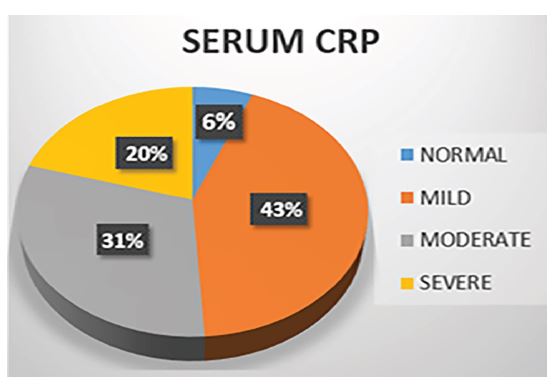 Figure 1:
 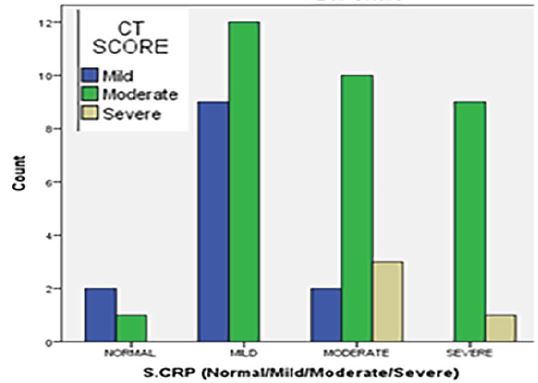 Figure 1:
 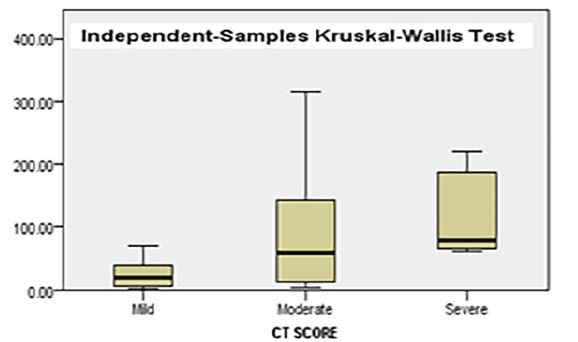 Figure 1:
 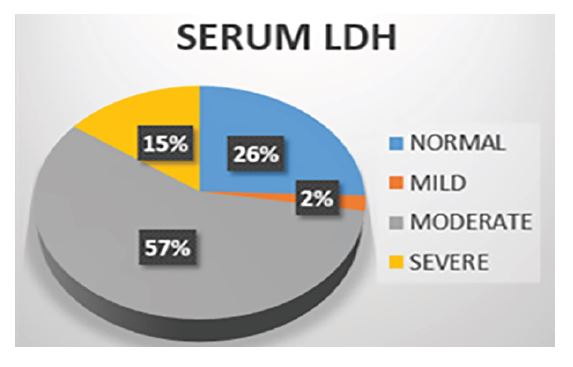 Figure 2: Pie chart showing percentage of derangement in serum LDH levels; Bar graph correlating the same with CT severity score; Box plot graph showing significant variation in the median values of serum LDH levels in the three groups." width="200px" src="https://hm-journals.s3.ap-south-1.amazonaws.com/home/journals/GIkJAJuOFtaTIyX1ocakLMjYLSnzWCnTUyXzCX8b.jpg">
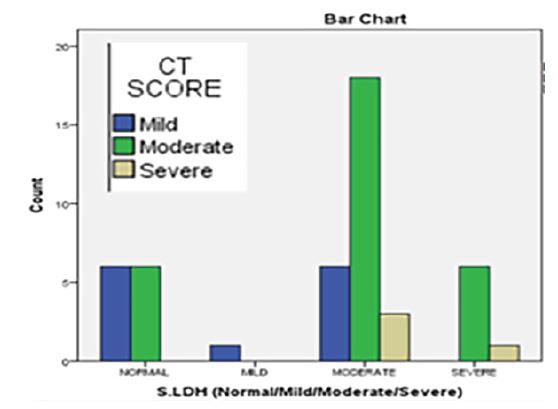 Figure 2: Pie chart showing percentage of derangement in serum LDH levels; Bar graph correlating the same with CT severity score; Box plot graph showing significant variation in the median values of serum LDH levels in the three groups." width="200px" src="https://hm-journals.s3.ap-south-1.amazonaws.com/home/journals/cSTvJrCPeEpMFRXzHwqEAmxEYA2RZohRWqOiUDYp.jpg">
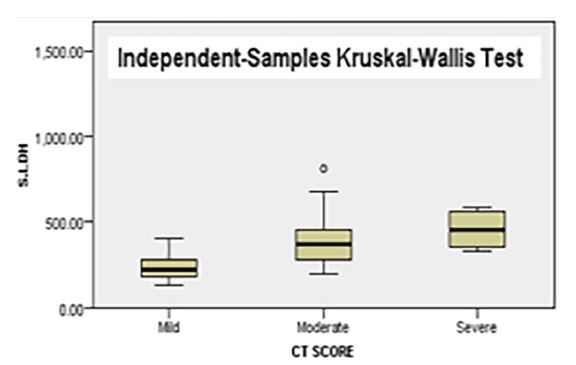 Figure 2: Pie chart showing percentage of derangement in serum LDH levels; Bar graph correlating the same with CT severity score; Box plot graph showing significant variation in the median values of serum LDH levels in the three groups." width="200px" src="https://hm-journals.s3.ap-south-1.amazonaws.com/home/journals/e3F5Wra281iJSFbI9FNBN1r92LkTbXBLKr2xdMiz.jpg">
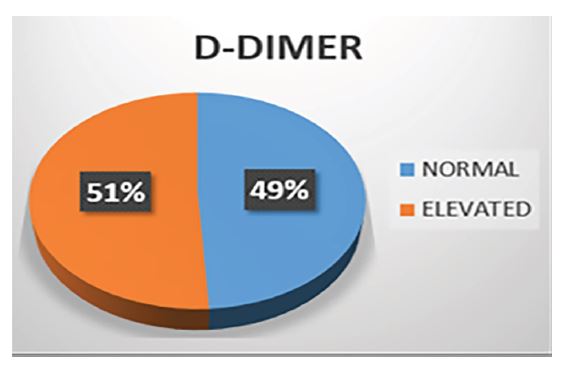 Figure 3: Pie chart showing percentage of derangement in serum D-dimer levels; Bar graph correlating the same with CT severity score; Box plot graph showing no significant variation in the median values of serum D-DIMER levels in the three groups." width="200px" src="https://hm-journals.s3.ap-south-1.amazonaws.com/home/journals/chlcAYUcOUciLx4Ekl6zNcC1OPG6Y9cjDLJtCWhv.jpg">
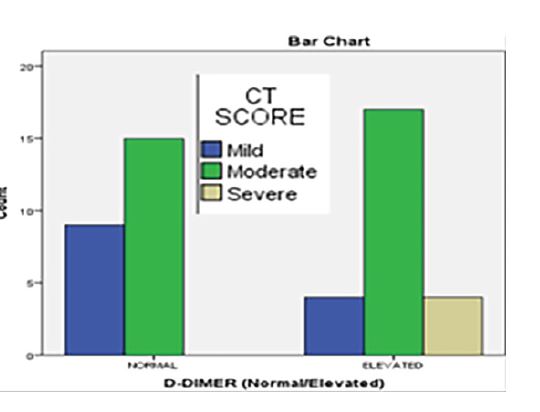 Figure 3: Pie chart showing percentage of derangement in serum D-dimer levels; Bar graph correlating the same with CT severity score; Box plot graph showing no significant variation in the median values of serum D-DIMER levels in the three groups." width="200px" src="https://hm-journals.s3.ap-south-1.amazonaws.com/home/journals/7euib0zwboWx7ZeUXEeAVSgszl4LyieGf4sRMgnv.jpg">
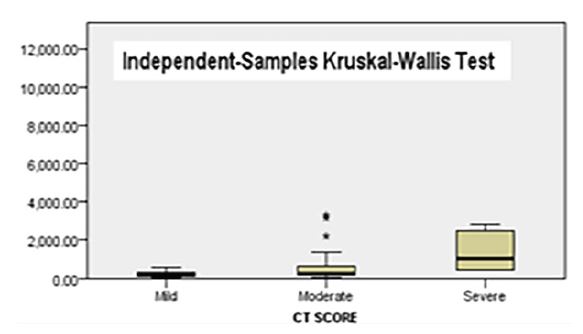 Figure 3: Pie chart showing percentage of derangement in serum D-dimer levels; Bar graph correlating the same with CT severity score; Box plot graph showing no significant variation in the median values of serum D-DIMER levels in the three groups." width="200px" src="https://hm-journals.s3.ap-south-1.amazonaws.com/home/journals/zAx1ErIjWGCcdMbW7XzdmVSd2Js9tGeWJ2omc10K.jpg">
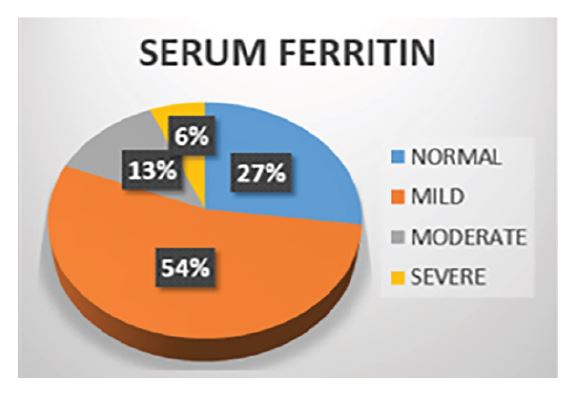 Figure 4: Pie chart showing percentage of derangement in serum ferritin levels; Bar graph correlating the same with CT severity score; Box plot graph showing no significant variation in the median values of serum Ferritin levels in the three groups." width="200px" src="https://hm-journals.s3.ap-south-1.amazonaws.com/home/journals/fqHrI3GwEBkHqpAH3EAIolUVnGsLanyN5lcS3CL7.jpg">
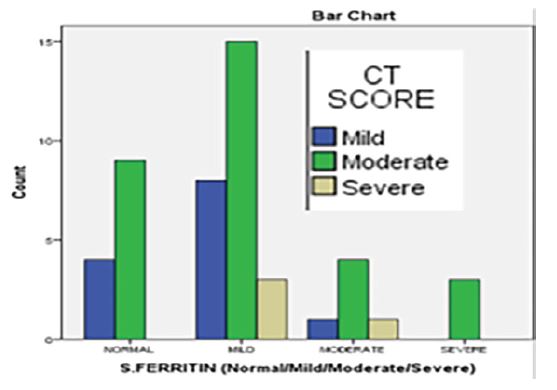 Figure 4: Pie chart showing percentage of derangement in serum ferritin levels; Bar graph correlating the same with CT severity score; Box plot graph showing no significant variation in the median values of serum Ferritin levels in the three groups." width="200px" src="https://hm-journals.s3.ap-south-1.amazonaws.com/home/journals/SSHptJFWUUqayRsQhBsym3LanzFl0jUdy95EcEDZ.jpg">
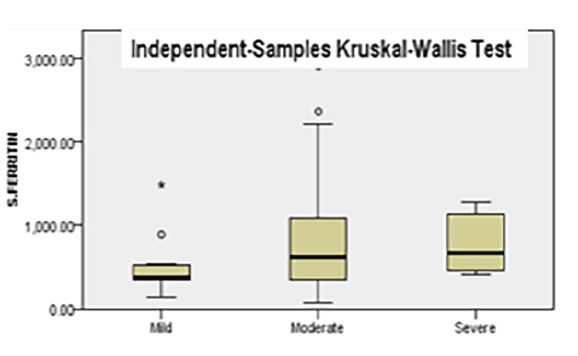 Figure 4: Pie chart showing percentage of derangement in serum ferritin levels; Bar graph correlating the same with CT severity score; Box plot graph showing no significant variation in the median values of serum Ferritin levels in the three groups." width="200px" src="https://hm-journals.s3.ap-south-1.amazonaws.com/home/journals/Gq8x9Ba4RzhcVCSMWORH5dqms5OPfTYGI4jDZ3gH.jpg">
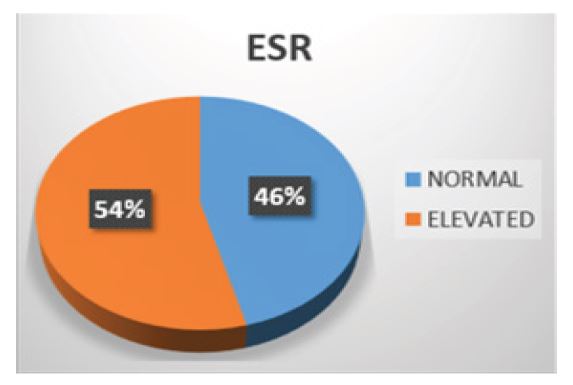 Figure 5: Pie chart showing percentage of derangement in serum ESR levels; Bar graph correlating the same with CT severity score; Box plot graph showing no significant variation in the median values of serum ESR levels in the three groups." width="200px" src="https://hm-journals.s3.ap-south-1.amazonaws.com/home/journals/BwUu3KgiUbkrpLkvwu3jkXZQkUWCrHq5XON6fEEv.jpg">
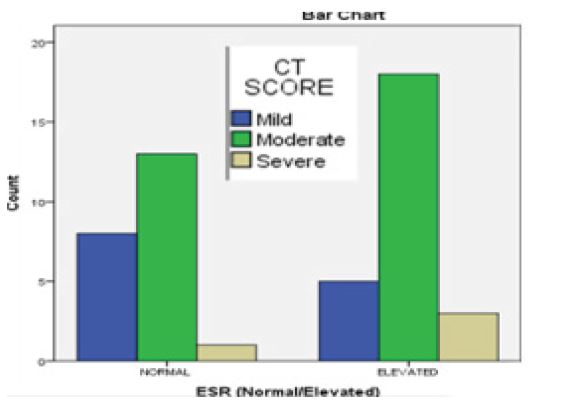 Figure 5: Pie chart showing percentage of derangement in serum ESR levels; Bar graph correlating the same with CT severity score; Box plot graph showing no significant variation in the median values of serum ESR levels in the three groups." width="200px" src="https://hm-journals.s3.ap-south-1.amazonaws.com/home/journals/a0OAYEUcdc6fYHDrs8EkAGLMEOnh4M7jsKMacs9P.jpg">
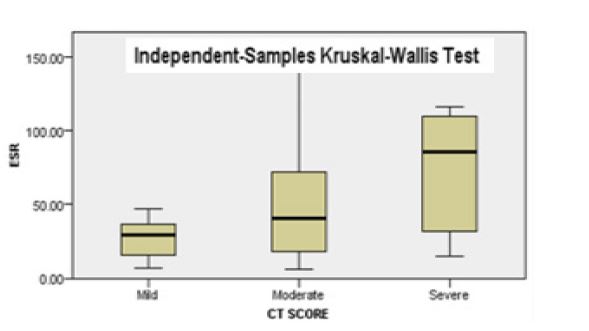 Figure 5: Pie chart showing percentage of derangement in serum ESR levels; Bar graph correlating the same with CT severity score; Box plot graph showing no significant variation in the median values of serum ESR levels in the three groups." width="200px" src="https://hm-journals.s3.ap-south-1.amazonaws.com/home/journals/BplZlnEFZe9YDC7FvJ945JMfVfDTJZwnjMVySmB7.jpg">
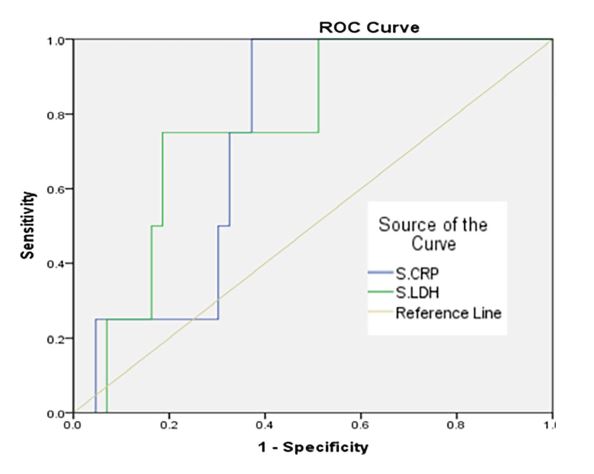 Figure 6: ROC analysis of serum CRP levels and serum LDH levels showing area under the curve to be 0.73 and 0.76, respectively." width="200px" src="https://hm-journals.s3.ap-south-1.amazonaws.com/home/journals/0MS9azmgLRE1NGz3EWnkjfXcphWMOWe1C2MBcKV3.jpg">
References
1. Bernheim A, Mei X, Huang M, et al. Chest CT findings in Coronavirus disease-19 (COVID-19): Relationship to duration of infection. Radiology 2020;295(3):200463.
2. Leonardi A, Scipione R, Alfieri G, et al. Role of computed tomography in predicting critical disease in patients with COVID-19 pneumonia: A retrospective study using a semiautomatic quantitative method. Eur J Radiol 2020;130(109202):109202.
3. Liu J, Yu H, Zhang S. The indispensable role of chest CT in the detection of coronavirus disease 2019 (COVID-19). Eur J Nucl Med Mol Imaging 2020;47(7):1638-9.
4. Li K, Fang Y, Li W, et al. CT image visual quantitative evaluation and clinical classification of coronavirus disease (COVID-19). Eur Radiol 2020;30(8):4407-16.
5. Saeed GA, Gaba W, Shah A, et al. Correlation between chest CT severity scores and the clinical parameters of adult patients with COVID-19 pneumonia. Radiol Res Pract 2021;2021:6697677.
6. Chang YC, Yu CJ, Chang SC, et al. Pulmonary sequelae in convalescent patients after severe acute respiratory syndrome: evaluation with thin-section CT. Radiology 2005;236(3):1067-75.
7. Bhandari S, Rankawat G, Bagarhatta M, et al. Clinico-radiological evaluation and correlation of CT chest images with progress of disease in COVID-19 patients. J Assoc Physicians India 2020;68(7):34-42.